
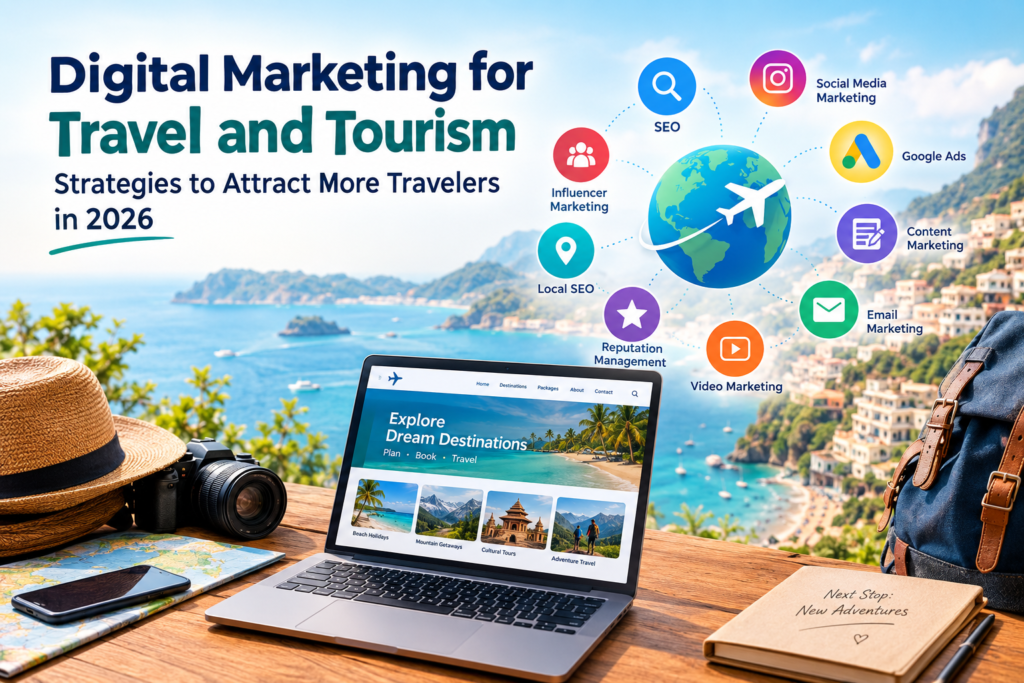
The way people plan and book their travels has changed significantly with the growth of digital technology. Today, travelers rarely depend only on travel agents, brochures, newspapers, or word-of-mouth recommendations when deciding where to go or what to book. Instead, they use search engines, social media platforms, travel websites, online reviews, videos, blogs, and booking platforms to research their options before making a decision.
For travel agencies, tour operators, hotels, resorts, homestays, destination management companies, and other tourism businesses, this shift has created both opportunities and challenges. Businesses that can build a strong online presence can connect with potential travelers at different stages of their decision-making journey.
This is where digital marketing for travel and tourism becomes important.
Digital marketing allows travel and tourism businesses to promote destinations, services, packages, accommodations, and experiences through online channels. From search engine optimization (SEO) and social media marketing to Google Ads, content marketing, email campaigns, influencer marketing, and online reputation management, businesses can use multiple strategies to attract relevant audiences and encourage them to take action.
In 2026, simply having a website or social media account is not enough. Travelers expect useful information, attractive visuals, easy navigation, quick responses, authentic reviews, and a convenient booking experience.
A well-planned digital marketing strategy can help tourism businesses:
- Improve online visibility
- Reach potential travelers
- Build brand awareness
- Generate qualified leads
- Increase website traffic
- Build customer trust
- Promote travel packages
- Encourage direct bookings
- Strengthen customer relationships
- Measure marketing performance
This guide explores the major digital marketing strategies for travel and tourism in 2026, explains why they matter, and provides practical ideas that travel businesses can use to improve their online presence.
What Is Digital Marketing for Travel and Tourism?
Digital marketing for travel and tourism refers to the use of digital platforms, online communication channels, and internet-based marketing strategies to promote travel-related businesses, destinations, services, and experiences.
The objective is not simply to advertise a travel package. Digital marketing can support the complete customer journey—from helping someone discover a destination to providing information, building trust, generating interest, and ultimately encouraging a booking or inquiry.
For example, imagine someone searching online for a weekend getaway from Mumbai. They may first search for destinations, watch travel videos on social media, read blogs, compare hotels, check Google reviews, look at photographs, and then search for tour packages.
A travel business that appears at several of these stages has more opportunities to introduce its brand to that potential customer.
Digital marketing can include:
- Search Engine Optimization (SEO)
- Content marketing
- Social media marketing
- Google Ads
- Meta Ads
- Email marketing
- Influencer marketing
- Video marketing
- Local SEO
- Online reputation management
- Remarketing
- Website optimization
- Mobile marketing
The exact combination depends on the type of tourism business, target audience, destination, budget, and marketing objectives.
Businesses That Can Benefit From Travel Digital Marketing
Digital marketing is relevant to many businesses operating within the travel and tourism sector, including:
Travel Agencies
Travel agencies can use digital channels to promote holiday packages, domestic tours, international tours, honeymoon packages, group tours, and customized travel experiences.
Tour Operators
Tour operators can use SEO, social media, paid advertising, and content marketing to showcase itineraries and attract travelers interested in particular destinations or experiences.
Hotels and Resorts
Hotels can use digital marketing to improve visibility, promote rooms and amenities, showcase experiences, collect reviews, and encourage direct bookings.
Homestays
Smaller accommodation businesses can use local SEO, social media, photography, reviews, and destination-focused content to compete for attention with larger hotels.
Airlines and Transportation Businesses
Airlines, car rental companies, buses, trains, and other transportation providers can use digital campaigns to communicate routes, offers, services, and travel information.
Destination Management Companies
These organizations can use digital marketing to promote specific destinations, experiences, attractions, and tourism programs to relevant audiences.
Why Is Digital Marketing Important for the Travel and Tourism Industry?
Travel is an experience-driven industry. Before spending money, travelers often want to see what a destination looks like, understand what they can do there, compare alternatives, and learn from other people’s experiences.
Digital marketing gives businesses multiple opportunities to provide this information.
Travelers Search Online Before Booking
One of the biggest reasons digital marketing matters is the amount of online research that happens before a travel decision.
A traveler may search for:
- Best places to visit
- Best time to visit a destination
- Hotels near tourist attractions
- Things to do in a city
- Family-friendly destinations
- Honeymoon destinations
- Weekend getaways
- Budget travel packages
- Luxury resorts
- Restaurants and local experiences
This creates opportunities for businesses to appear when potential customers are actively looking for travel information.
For example, a travel agency that publishes a useful article about “Best Weekend Getaways From Mumbai” may attract people researching short trips. A hotel can create content around attractions near its property. A tour operator can create destination guides that answer common traveler questions.
The important point is that digital marketing can help businesses become visible before the traveler is ready to book.
Builds Brand Awareness
Travelers have many options when selecting destinations, hotels, tour operators, and travel services.
A strong online presence can help a business become familiar to potential customers.
Brand awareness can be developed through:
- Search results
- Instagram content
- YouTube videos
- Travel blogs
- Online advertisements
- Influencer collaborations
- Customer reviews
- Email newsletters
Repeated exposure across relevant digital channels can help travelers recognize a business when they eventually begin comparing booking options.
For a newer travel company, this can be particularly useful because digital platforms provide opportunities to introduce the brand to audiences without relying entirely on traditional advertising.
Increases Direct Bookings
A major objective for many travel businesses is increasing direct inquiries and bookings.
A well-optimized website can guide visitors toward actions such as:
- Requesting a quotation
- Calling the business
- Sending a WhatsApp message
- Filling out an inquiry form
- Booking a room
- Purchasing a tour package
- Signing up for updates
However, attracting website visitors is only one part of the process.
The website should also provide clear information about pricing, packages, destinations, inclusions, policies, contact details, reviews, and booking procedures.
A simple and convenient user journey can make it easier for interested travelers to take the next step.
Helps Businesses Reach the Right Audience
Not every traveler has the same needs.
A family planning a vacation may look for completely different information from a solo backpacker. Similarly, a luxury traveler may have different expectations from someone searching for a budget trip.
Digital marketing allows businesses to create campaigns and content around specific audiences.
Possible audience segments include:
- Families
- Couples
- Solo travelers
- Students
- Business travelers
- Adventure travelers
- Luxury travelers
- Budget travelers
- Senior travelers
- Group travelers
Businesses can also consider location, interests, travel preferences, and previous interactions when planning campaigns.
This makes it possible to develop more relevant marketing messages instead of communicating the same offer to everyone.
Top Digital Marketing Strategies for Travel and Tourism in 2026
There is no single digital marketing strategy that works for every travel business.
A successful approach usually combines several channels and aligns them with specific business objectives.
Here are some of the major strategies businesses can consider in 2026.
1. Search Engine Optimization (SEO)
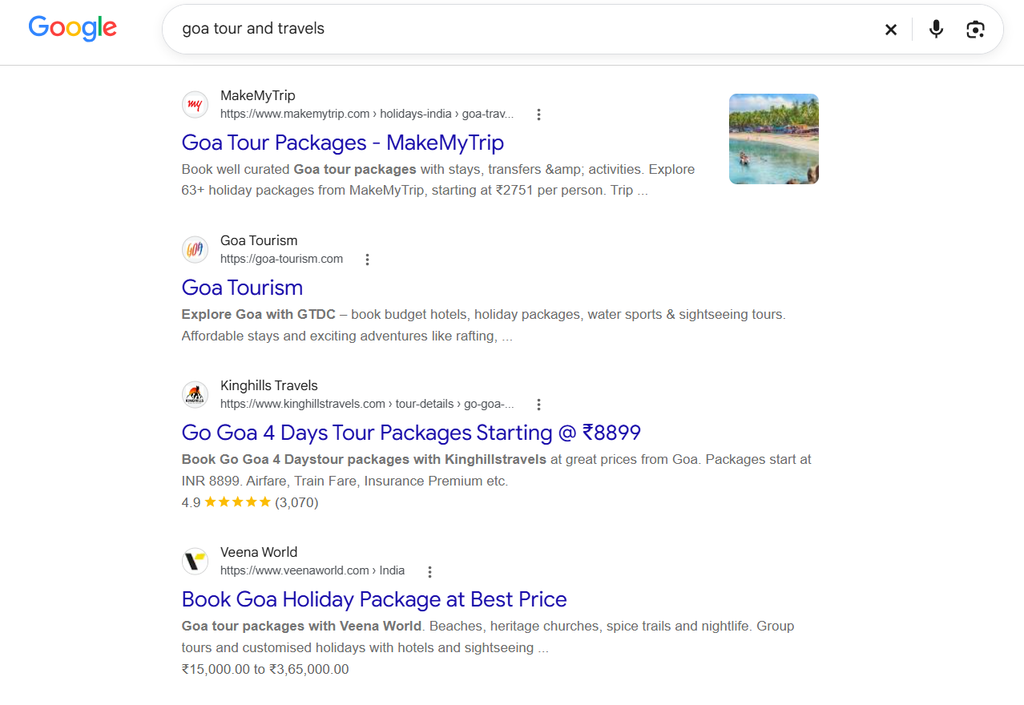
SEO is one of the most important long-term strategies for travel businesses.
Search Engine Optimization involves improving a website and its content so that search engines can better understand and potentially rank its pages for relevant searches.
For travel businesses, SEO can help attract people searching for destinations, accommodations, travel services, and experiences.
For example, a tourism website could create pages targeting searches such as:
- Best places to visit in Goa
- Weekend trips from Mumbai
- Family holiday packages in India
- Best hotels in Jaipur
- Things to do in Kerala
- Honeymoon packages in Maldives
The goal should not simply be to insert keywords repeatedly into a page. Instead, businesses should create genuinely useful content that satisfies what the traveler is looking for.
Important Areas of Travel SEO
Travel businesses can focus on several areas, including:
Keyword research:
Identify the terms and questions potential customers use when searching.
On-page SEO:
Optimize titles, headings, content, URLs, images, internal links, and relevant page elements.
Technical SEO:
Ensure that search engines can properly crawl and understand the website.
Local SEO:
Improve visibility for location-based searches.
Content marketing:
Publish useful destination guides, travel tips, itineraries, and other informative resources.
Mobile optimization:
Ensure the website provides a good experience on smartphones.
SEO can take time, but consistent optimization and valuable content can help build sustainable organic visibility.
2. Content Marketing
Travel is naturally suited to content marketing because people need information and inspiration before making travel decisions.
A travel business can use content to answer questions, showcase destinations, explain services, and demonstrate expertise.
Content formats can include:
- Blog articles
- Destination guides
- Travel itineraries
- Videos
- Reels
- Infographics
- Travel checklists
- FAQs
- Customer stories
- Email newsletters
- Social media posts
For example, instead of publishing only promotional posts about a Goa package, a travel company could create an informative guide covering:
“A 5-Day Goa Itinerary: Places to Visit, Things to Do and Travel Tips.”
This type of content can attract people during the research stage and introduce them to the company.
Travel Content Should Answer Real Questions
Useful travel content may answer questions such as:
- When is the best time to visit?
- How many days are enough?
- What should travelers pack?
- What attractions should they visit?
- What is the approximate budget?
- Where should they stay?
- How can they reach the destination?
- What activities are available?
- Is the destination suitable for families?
When content genuinely helps travelers, it can contribute to both visibility and trust.
3. Social Media Marketing
Social media plays an important role in how people discover travel destinations and experiences.
Platforms such as Instagram, Facebook, YouTube, and Pinterest provide opportunities for tourism businesses to communicate visually.
Travel is highly visual, which makes formats such as photographs, short videos, destination reels, hotel tours, and experience-based content particularly useful.
A travel business can create content around:
- Destination highlights
- Hotel rooms
- Local attractions
- Food experiences
- Travel tips
- Itinerary ideas
- Customer experiences
- Behind-the-scenes content
- Seasonal destinations
- Travel offers
Use Short-Form Video
Short-form videos can show travelers what an experience actually looks like.
For example, a resort could create a short video showing:
Arrival → Room → Pool → Restaurant → Sunset → Local attraction
This tells a visual story in a short format.
Similarly, a tour operator could create a destination reel showing key attractions included in a package.
The purpose should not always be to sell immediately. Some content can focus on inspiration, while other posts can provide practical information or encourage inquiries.
4. Google Ads and Paid Search Marketing
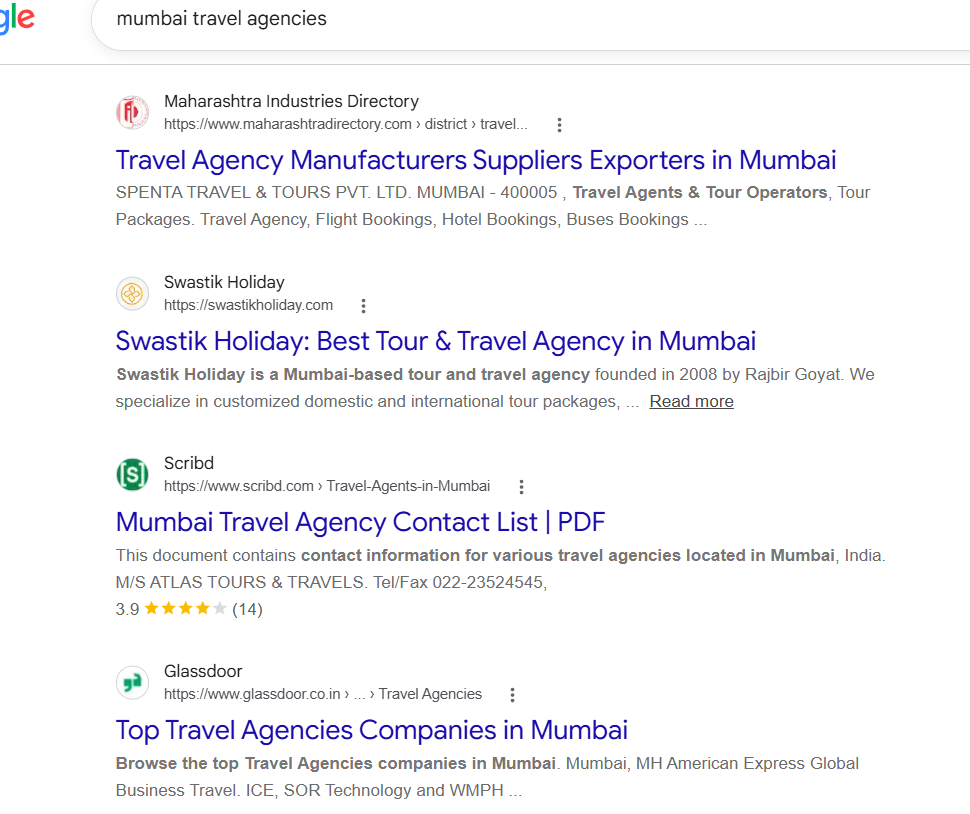
SEO focuses on organic visibility, while paid search advertising can help businesses appear for selected searches through advertising.
For travel businesses, paid search can be useful when targeting people who are actively searching for a product or service.
Examples could include searches related to:
- Goa tour packages
- Mumbai travel agencies
- Dubai holiday packages
- Luxury resorts in Goa
- Rajasthan tour packages
A business can create advertisements that direct potential customers to relevant landing pages.
For example, an advertisement for a Rajasthan tour should ideally lead to a page specifically about the Rajasthan package rather than a generic homepage.
Benefits of Paid Search
Paid search campaigns can help businesses:
- Reach high-intent audiences
- Promote specific packages
- Generate inquiries
- Drive website traffic
- Test different offers
- Measure advertising performance
Businesses should monitor metrics such as clicks, conversions, cost per lead, and return on advertising spend to understand campaign performance.
5. Meta Ads for Travel Businesses
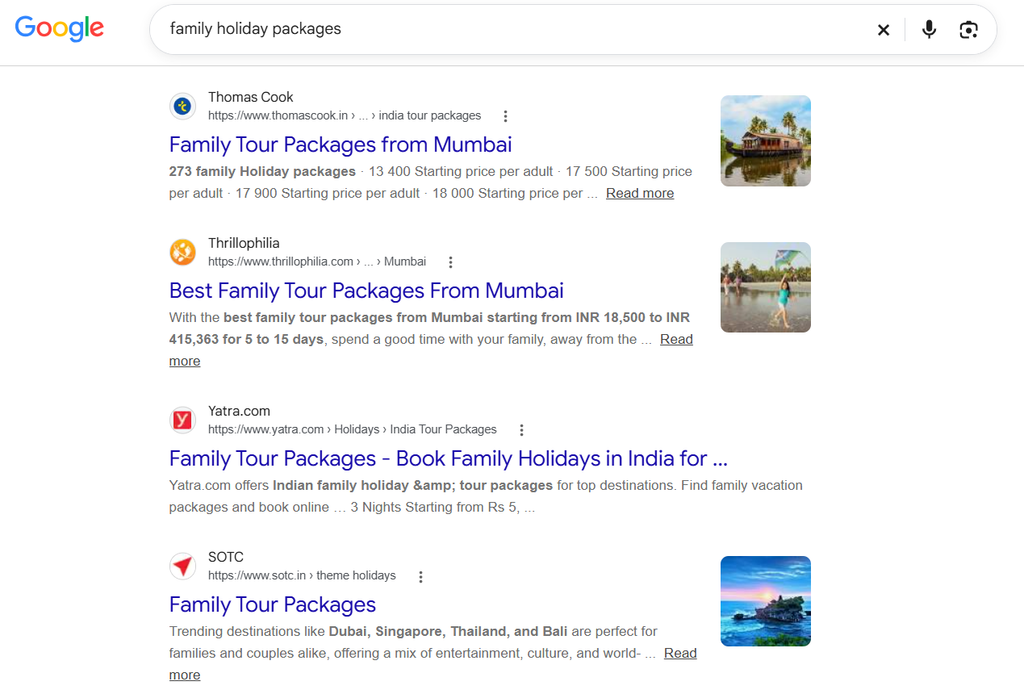
Meta Ads can help travel businesses promote destinations, packages, hotels, and experiences across platforms such as Facebook and Instagram.
Because travel is highly visual, businesses can use images and videos to communicate the experience they are offering.
Examples include:
- Resort promotions
- Honeymoon packages
- Family holidays
- International tours
- Weekend getaways
- Adventure trips
- Seasonal offers
Retargeting Can Reconnect With Interested Travelers
Many visitors may explore a travel website without immediately booking.
Retargeting campaigns can help businesses reconnect with people who have previously interacted with their website or digital content, where appropriate consent and platform requirements are followed.
For example, someone may visit a tour package page, review the itinerary, and leave without submitting an inquiry.
A relevant follow-up advertisement can remind that person about the travel service.
This can be useful because travel decisions often involve research and comparison rather than an immediate purchase.
6. Influencer Marketing
Travel influencers and content creators can introduce destinations and travel businesses to audiences interested in travel.
A collaboration might involve:
- Destination videos
- Hotel stays
- Resort reviews
- Travel guides
- Experience-based content
- Instagram Reels
- YouTube videos
- Social media stories
However, selecting an influencer should involve more than looking at follower count.
Businesses should consider:
- Audience relevance
- Engagement quality
- Content style
- Geographic audience
- Travel niche
- Previous brand collaborations
- Authenticity
- Campaign objectives
A smaller creator with a highly relevant travel audience may be more aligned with a particular campaign than a large creator whose audience has little interest in the destination or service.
7. Email Marketing
Email marketing can help travel businesses maintain relationships with potential and existing customers.
Instead of communicating only when a sale is available, businesses can provide useful travel information through regular emails.
Examples include:
- New destination guides
- Seasonal travel ideas
- Special packages
- Travel tips
- Destination recommendations
- Personalized offers
- Booking reminders
- Post-trip communication
For example, someone who previously showed interest in family holidays could receive content related to family-friendly destinations rather than unrelated adventure travel offers.
Email marketing can therefore support both customer engagement and repeat business.
8. Online Reviews and Reputation Management
Trust is extremely important when people are spending money on travel.
Before booking a hotel, tour, restaurant, or travel service, potential customers may look at online reviews and ratings.
Reviews can influence how travelers perceive a business.
Travel companies should therefore actively manage their online reputation by:
- Encouraging genuine customer reviews
- Responding professionally to feedback
- Addressing legitimate customer concerns
- Monitoring reviews across relevant platforms
- Learning from recurring complaints
- Highlighting authentic customer experiences
A business should avoid creating fake reviews or misleading testimonials. Authentic customer feedback is more useful for building long-term credibility.
9. Local SEO for Tourism Businesses
Local SEO is especially important for businesses that serve customers in a specific geographic location.
For example, a travel agency operating in Mumbai may want to appear when people search for travel services in Mumbai or nearby areas.
Local SEO activities can include:
- Optimizing the Google Business Profile
- Maintaining accurate business information
- Using relevant location-based content
- Collecting genuine reviews
- Creating location-specific website pages
- Maintaining consistent contact information
Tourism businesses can also create useful local content.
For example:
“Best Weekend Trips From Mumbai”
could attract people who are specifically looking for nearby travel options.
10. Video Marketing
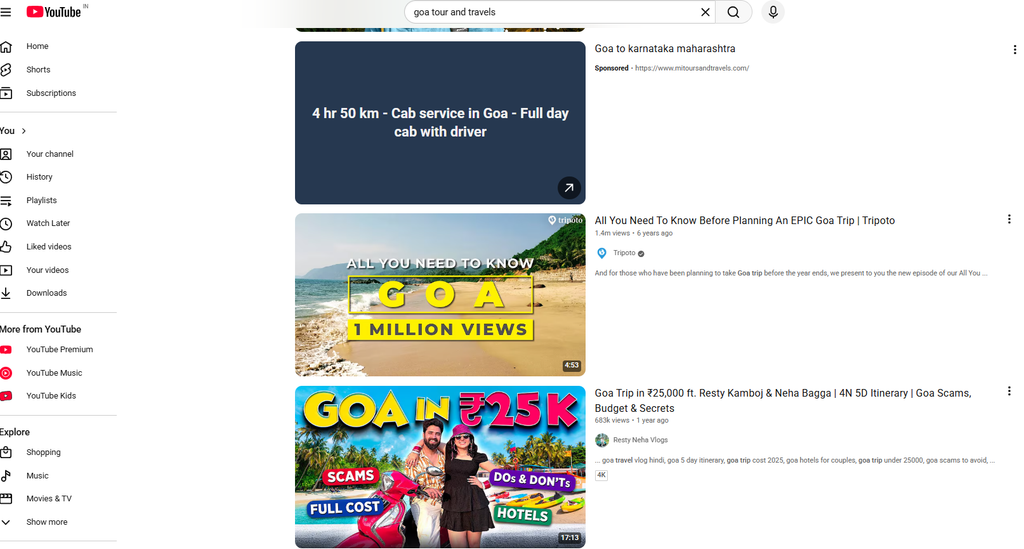
Video has become an important format for communicating travel experiences.
A photograph can show a destination, but a video can demonstrate movement, atmosphere, activities, and the overall experience.
Travel businesses can create:
- Destination videos
- Hotel walkthroughs
- Resort tours
- Travel guides
- Customer testimonials
- Day-in-the-life travel videos
- Itinerary videos
- Short-form destination reels
For example, a hotel can create a video showing the guest journey from arrival to check-in, room experience, dining, amenities, and nearby attractions.
This can give potential customers a clearer idea of what they can expect.
How to Use Social Media to Attract More Travelers
Social media has become an important discovery channel for the travel industry. People often use visual content to discover destinations, hotels, restaurants, activities, and travel experiences.
For tourism businesses, social media provides an opportunity to show potential customers what they can experience rather than simply telling them about it.
A strong social media strategy should combine inspiration, information, engagement, and promotion.
Create Destination-Focused Content
Travel businesses can create content around destinations that their target audience is interested in.
For example, a travel agency offering Maharashtra tours could create posts about:
- Places to visit in Maharashtra
- Weekend getaways from Mumbai
- Best hill stations near Mumbai
- Monsoon destinations
- Family-friendly destinations
- Historical places to visit
- Adventure activities
Destination-focused content can attract people who are still researching their next trip.
Once they discover the content, the business can introduce its relevant travel packages or services.
Use Reels and Short-Form Videos
Short-form videos can be useful for showcasing travel experiences quickly.
A travel business can create videos such as:
- “3 places you must visit in Goa”
- “A day at this luxury resort”
- “5 things to do in Dubai”
- “Weekend itinerary from Mumbai”
- “What ₹20,000 can get you on a weekend trip”
- “Things to know before visiting Kashmir”
The content should provide value instead of making every video a direct advertisement.
For example, an itinerary video can first educate viewers about a destination and then mention that the business offers customized packages for travelers who want assistance planning their trip.
Share Customer Experiences
Real customer experiences can add credibility to a travel brand.
Businesses can share:
- Customer photographs
- Video testimonials
- Trip experiences
- Reviews
- Travel stories
- Before-and-after booking experiences
With appropriate customer permission, user-generated content can demonstrate how actual travelers experienced a destination or service.
This can make promotional communication feel more authentic.
Encourage User-Generated Content
Travelers frequently take photographs and videos during their trips.
Tourism businesses can encourage customers to share their experiences and tag the brand.
For example, a hotel could encourage guests to share their favorite property experience on social media. A tour operator could create a branded hashtag for travelers participating in its tours.
User-generated content can provide additional content while also showcasing real customer experiences.
Engage With Potential Travelers
Social media should not be treated only as a broadcasting platform.
Travelers may ask questions such as:
- What is included in the package?
- Is this destination suitable for children?
- What is the best month to visit?
- Is airport pickup available?
- How many days are recommended?
- Can the itinerary be customized?
Responding to questions promptly can help businesses build relationships and provide a better customer experience.
The Role of SEO in Travel and Tourism Marketing
Search Engine Optimization is particularly relevant to the travel industry because travelers frequently search for information before making decisions.
A travel website can potentially attract visitors at several stages of the customer journey.
For example:
Research stage:
“Best places to visit in Kerala”
Planning stage:
“Kerala 7 day itinerary”
Comparison stage:
“Best Kerala tour packages”
Booking stage:
“Kerala tour package price”
Each search represents a different intent.
A strong travel SEO strategy should therefore address different types of searches instead of focusing only on transactional keywords.
Keyword Research for Travel Websites
Keyword research helps businesses understand what potential travelers are searching for.
Travel-related keywords can be categorized into different groups.
Informational Keywords
These are searches where users are primarily looking for information.
Examples:
- Best time to visit Goa
- Things to do in Jaipur
- Places to visit in Kerala
- How to plan a Rajasthan trip
Commercial Keywords
These searches often indicate that the person is researching available options.
Examples:
- Best hotels in Goa
- Best travel agencies in Mumbai
- Goa holiday packages
- Best resorts in Kerala
Transactional Keywords
These searches may indicate stronger intent to take an action.
Examples:
- Book Goa tour package
- Dubai holiday package price
- Book hotel in Goa
- Kerala tour package booking
Creating content for different search intents can help a business reach travelers at different stages of the decision-making process.
Optimize Destination Pages
Travel websites can create dedicated pages for important destinations.
For example, a travel company offering tours across India could create pages for:
- Goa
- Kerala
- Rajasthan
- Himachal Pradesh
- Kashmir
- Andaman
- Gujarat
- Maharashtra
Each destination page should provide genuinely useful information.
It can include:
- Destination overview
- Popular attractions
- Recommended duration
- Best time to visit
- Available activities
- Accommodation options
- Transportation information
- Suggested itineraries
- Frequently asked questions
- Relevant travel packages
This creates a better resource for travelers while also giving search engines more context about the website.
Optimize for Local Search
Local SEO can be particularly valuable for travel agencies, hotels, resorts, restaurants, and other tourism businesses with physical locations.
For example, a traveler might search:
“travel agency near me”
or
“best travel agency in Mumbai.”
Businesses can improve their local visibility by maintaining accurate business information, collecting genuine reviews, creating location-relevant content, and ensuring their website clearly communicates where they operate.
Mobile-Friendly Travel Websites
A large amount of online travel research takes place on smartphones.
This makes mobile optimization an important part of digital marketing for travel and tourism.
A mobile-friendly website should:
- Load efficiently
- Have readable text
- Use easy navigation
- Display images properly
- Have clear buttons
- Make inquiry forms simple
- Provide easy access to contact options
- Make booking steps straightforward
Imagine a traveler discovering a hotel through Instagram and clicking through to its website.
If the website is difficult to use on a smartphone, the business may lose a potential customer.
Therefore, the journey from social media or search results to the website should be smooth.
How Content Marketing Can Influence Travel Decisions
Travelers usually need more than a promotional message before making a decision.
They may want to know what a destination offers, what the experience will be like, how much time they need, and what they should expect.
This makes content marketing an important part of the travel customer journey.
A tourism business can create content for different stages.
Inspiration Content
This type of content helps people discover new destinations.
Examples:
- 10 Beautiful Places to Visit in India
- Best Summer Destinations
- Unique Weekend Getaways
- Best International Destinations for Couples
Planning Content
This helps travelers organize their trip.
Examples:
- Complete Goa Travel Guide
- 5-Day Rajasthan Itinerary
- What to Pack for a Himalayan Trip
- How to Plan a Family Vacation
Comparison Content
This helps people evaluate options.
Examples:
- Goa vs Kerala: Which Destination Is Right for You?
- Hotel vs Homestay: Which Is Better for Your Trip?
- Group Tour vs Customized Tour
Booking-Oriented Content
This targets travelers who are closer to making a decision.
Examples:
- Best Goa Tour Packages
- Dubai Holiday Packages
- Family Vacation Packages in India
- Luxury Rajasthan Tours
Using different types of content allows businesses to communicate with travelers throughout their journey.
Content Ideas for Travel Businesses
A travel company does not have to publish the same type of promotional post repeatedly.
Instead, it can create a content calendar covering different topics.
Some useful ideas include:
Destination Guides
Create detailed guides covering attractions, food, accommodation, transportation, and activities.
Travel Itineraries
Provide sample itineraries for different durations.
For example:
3 Days in Goa
Day 1 – North Goa
Day 2 – Beaches and local experiences
Day 3 – South Goa
Travel Tips
Share practical advice about:
- Packing
- Transportation
- Local customs
- Budget planning
- Weather
- Safety
- Travel documents
Seasonal Content
Create content around travel seasons and holidays.
Examples:
- Best Monsoon Destinations in India
- Best Winter Destinations
- Summer Vacation Ideas
- Christmas Holiday Destinations
Frequently Asked Questions
Create content answering common customer questions.
This can help both users and search engines understand the information available on the website.
How Paid Advertising Can Generate Travel Leads and Bookings
Organic marketing strategies such as SEO and content marketing can take time to develop. Paid advertising can provide businesses with another way to reach selected audiences.
Travel businesses can use platforms such as Google Ads, Meta Ads, and YouTube Ads depending on their objectives.
Paid advertising can be used to promote:
- Tour packages
- Hotels
- Resorts
- Flights
- Seasonal offers
- Destination packages
- Special experiences
- Early-bird offers
However, running advertisements alone does not guarantee bookings.
The entire customer journey matters.
Create Dedicated Landing Pages
If an advertisement promotes a particular travel package, the landing page should provide information directly related to that package.
For example:
Advertisement:
“7-Day Kerala Holiday Package”
Landing Page:
“7-Day Kerala Holiday Package – Itinerary, Price, Inclusions & Booking”
The visitor should not have to search through the website to find the advertised offer.
A good landing page can include:
- Package overview
- Destination photographs
- Itinerary
- Inclusions
- Exclusions
- Pricing information
- Customer reviews
- FAQs
- Contact options
- Clear call to action
Use Strong Calls to Action
Travel websites and advertisements should clearly communicate the next step.
Examples include:
- Plan Your Trip
- Get a Free Quote
- Enquire Now
- Book Your Holiday
- Request an Itinerary
- Talk to a Travel Expert
- Customize Your Trip
The CTA should match the user’s stage in the buying journey.
Someone researching destinations may respond better to an informative guide, while someone actively comparing packages may be ready to request a quote.
Personalization in Digital Marketing for Travel and Tourism
Travel is highly personal. Different travelers have different budgets, interests, destinations, and expectations.
Personalized digital marketing can help businesses make their communication more relevant.
For example, a business could create different campaigns for:
- Family travelers
- Couples
- Solo travelers
- Adventure travelers
- Luxury travelers
- Budget travelers
- Corporate travelers
Instead of sending the same message to every customer, businesses can use available customer information and interactions to provide more relevant recommendations, subject to applicable privacy and consent requirements.
Location-Based Marketing
Location can be useful when promoting travel services.
For example, a travel company in Mumbai may create campaigns specifically for people looking for:
- Weekend trips from Mumbai
- International tours from Mumbai
- Mumbai travel agencies
- Nearby holiday destinations
Similarly, a hotel can target travelers researching accommodation within its destination.
Location-focused marketing can make campaigns more relevant to the audience.
Personalized Email Campaigns
Email marketing can also be personalized based on customer interests.
For example, someone who previously interacted with content about international travel could receive relevant destination recommendations.
A family traveler could receive family-friendly holiday ideas.
The purpose is to make communication more useful rather than simply sending the same promotional email to everyone.
The Role of AI and Emerging Technologies in Travel Marketing in 2026
Artificial intelligence and other emerging technologies are influencing how businesses create content, analyze data, communicate with customers, and personalize experiences.
For travel businesses, AI can support several marketing and customer-service activities.
AI-Powered Customer Support
Travel websites can use AI-powered chat systems to help answer common questions.
For example, travelers may ask:
- What packages do you offer?
- How many days should I stay?
- What is included?
- What is the cancellation policy?
- Which destinations are suitable for families?
Automated systems can help provide immediate responses to frequently asked questions, while more complex issues can be directed to human staff.
AI-Assisted Personalization
AI tools can analyze available customer data and interactions to identify patterns and help businesses provide more relevant recommendations.
For example, a travel platform could recommend destinations based on previous searches or preferences.
Businesses should still ensure that customer data is handled responsibly and according to applicable privacy requirements.
AI-Assisted Content Creation
AI tools can support marketers with tasks such as:
- Brainstorming content topics
- Creating content outlines
- Generating ideas for social posts
- Analyzing keywords
- Summarizing information
- Developing campaign variations
However, travel businesses should review and fact-check AI-assisted content before publishing it.
Travel information can change, including prices, opening hours, entry requirements, transportation information, and local regulations.
Human review remains important.
Mobile Marketing for the Travel Industry
Mobile devices play an important role throughout the travel journey.
A traveler may use a smartphone to:
- Search for destinations
- Compare hotels
- Watch travel videos
- Contact a travel company
- Read reviews
- View maps
- Check itineraries
- Make bookings
- Communicate with a hotel or travel agent
This means mobile marketing should not be treated as an optional part of a digital strategy.
WhatsApp Marketing
For many travel businesses, messaging platforms can make communication easier.
A potential customer may prefer sending a message rather than completing a long inquiry form.
Businesses can use messaging channels for appropriate purposes such as:
- Answering inquiries
- Sharing itineraries
- Providing booking information
- Sending reminders
- Communicating travel updates
- Providing customer support
Businesses should avoid sending unsolicited promotional messages and should follow applicable messaging and privacy requirements.
Mobile-Friendly Booking Experience
The booking process should be simple on smartphones.
Travelers should be able to quickly find:
- Package information
- Prices
- Dates
- Availability
- Contact details
- Payment options
- Terms and conditions
A complicated booking experience can create unnecessary friction.
How to Create a Digital Marketing Strategy for a Travel Business
Having individual marketing activities is not the same as having a digital marketing strategy.
A strategy connects goals, audiences, channels, content, advertising, and measurement.
Here is a practical process that travel businesses can follow.
Step 1 – Define Your Target Audience
Start by identifying who you want to reach.
Consider:
- Age group
- Location
- Travel interests
- Budget
- Travel purpose
- Preferred destinations
- Booking behavior
For example, a luxury resort and a budget backpacking company may require completely different marketing strategies.
Step 2 – Set Clear Marketing Goals
The business should define what it wants digital marketing to achieve.
Possible goals include:
- Increase website traffic
- Generate more inquiries
- Increase direct bookings
- Improve brand awareness
- Increase social media engagement
- Generate qualified leads
- Increase repeat customers
Goals should be specific enough to measure.
Step 3 – Research Travel Keywords
Keyword research can reveal what potential customers are searching for.
Create keyword groups based on:
- Destination
- Service
- Audience
- Travel intent
- Location
- Season
For example:
Destination: Goa
Service: Tour package
Audience: Families
Location: Mumbai
This can lead to more specific keyword opportunities related to family Goa packages from Mumbai.
Step 4 – Optimize Your Website
The website is often the central destination for digital marketing campaigns.
Make sure it has:
- Clear navigation
- Useful content
- Destination pages
- Service pages
- Fast and mobile-friendly experience
- Clear contact information
- Booking or inquiry options
- Customer reviews
- Strong CTAs
The website should make it easy for visitors to understand what the business offers and what they should do next.
Step 5 – Create Valuable Content
Develop a content calendar that includes different content formats.
For example:
Monday: Travel tip
Wednesday: Destination Reel
Friday: Blog article
Sunday: Customer story
The exact schedule can vary, but consistency is important.
Step 6 – Build a Social Media Strategy
Choose platforms based on the target audience and business objectives.
Focus on creating a mix of:
- Educational content
- Inspirational content
- Entertainment
- Customer stories
- Promotional content
Avoid making every social media post a sales pitch.
Step 7 – Launch Paid Advertising
Paid campaigns can support specific objectives such as promoting a new package or generating inquiries.
Start with clearly defined audiences, relevant landing pages, appropriate budgets, and measurable conversion goals.
Campaigns should be monitored regularly and adjusted based on actual performance.
Step 8 – Focus on Reviews and Reputation
Encourage genuine customers to leave feedback.
Monitor reviews and respond professionally.
Positive reviews can help demonstrate customer satisfaction, while negative feedback can reveal areas where the business may need to improve.
Step 9 – Track Marketing Performance
Digital marketing provides access to measurable data.
Track metrics that connect directly to business objectives rather than focusing only on vanity metrics.
For example, if the goal is to generate bookings, website traffic alone is not enough.
The business should also examine inquiries, conversion rates, booking value, and acquisition costs.
Step 10 – Continuously Improve Your Strategy
Digital marketing is not a one-time activity.
Search behavior, customer expectations, platforms, advertising systems, and content trends continue to change.
Businesses should regularly review:
- What content performs well?
- Which campaigns generate leads?
- Which pages receive traffic?
- Where are users leaving the website?
- Which destinations generate the most inquiries?
- Which advertising channels provide useful results?
The answers can then guide future marketing decisions.
Digital Marketing Metrics Travel Businesses Should Track
One of the major advantages of digital marketing is the ability to measure performance.
Instead of relying only on general assumptions, travel businesses can use data to understand how people interact with their website, advertisements, content, and social media channels.
However, businesses should focus on metrics that connect with actual marketing and business objectives.
Website Traffic
Website traffic shows how many visitors are coming to the website.
Businesses can analyze:
- Total visitors
- New visitors
- Returning visitors
- Traffic sources
- Most visited pages
- Geographic locations
- Device types
For example, if a destination guide is receiving significant organic traffic, the business can consider creating related content and connecting that article to relevant travel packages.
Organic Search Traffic
Organic traffic refers to visitors who reach the website through unpaid search results.
For a travel business investing in SEO, organic traffic can be an important indicator of visibility.
Businesses can monitor:
- Organic visitors
- Landing pages
- Search queries
- Keyword performance
- Click-through rates
- Organic conversions
A steady increase in relevant organic traffic can indicate that SEO and content efforts are improving visibility, although traffic should always be considered alongside conversions and business outcomes.
Keyword Rankings
Keyword rankings show where a website’s pages appear in search results for specific search terms.
Travel businesses may track keywords related to:
- Destinations
- Tour packages
- Hotels
- Travel agencies
- Local searches
- Travel information
However, rankings alone should not be treated as the final measure of success.
A keyword can have a high ranking but generate little relevant traffic or few inquiries.
The quality and relevance of the traffic matter.
Social Media Engagement
Travel businesses can monitor social media engagement to understand how audiences interact with content.
Important metrics can include:
- Likes
- Comments
- Shares
- Saves
- Video views
- Profile visits
- Link clicks
- Follower growth
For travel content, saves and shares can be particularly useful indicators because people may save destination ideas for future trips or share them with travel companions.
Leads Generated
For travel agencies and tour operators, generating qualified inquiries can be more meaningful than simply increasing website visits.
Leads can come through:
- Website forms
- Phone calls
- Social media messages
- Booking forms
Businesses should track where their leads originate so they can understand which marketing channels are contributing to inquiries.
Conversion Rate
Conversion rate measures the percentage of visitors or users who complete a desired action.
Depending on the business, a conversion could be:
- Booking a hotel
- Purchasing a tour
- Submitting an inquiry
- Requesting a quotation
- Calling the business
- Signing up for an email list
For example, if 1,000 people visit a travel package page and 50 submit inquiries, the inquiry conversion rate is 5%.
Understanding conversion rates can help businesses identify pages and campaigns that need improvement.
Cost Per Lead
When a business runs paid campaigns, it should understand how much it is spending to generate each lead.
For example, if a campaign spends ₹20,000 and generates 100 qualified inquiries, the average cost per lead is ₹200.
However, businesses should also consider lead quality.
A campaign that generates many low-quality inquiries may not be as useful as a campaign generating fewer but more relevant potential customers.
Return on Ad Spend (ROAS)
ROAS helps businesses understand the revenue generated in relation to advertising expenditure.
For example, if a business spends ₹50,000 on advertising and attributes ₹2,00,000 in revenue to those ads, the ROAS is 4:1.
Businesses should define attribution carefully because customers may interact with multiple channels before booking.
Customer Acquisition Cost
Customer acquisition cost, or CAC, looks at the overall cost involved in acquiring customers.
Depending on how a business calculates it, this can include marketing and sales expenses.
Tracking acquisition costs can help travel companies understand whether their marketing activities are commercially sustainable.
Common Digital Marketing Mistakes in the Travel Industry
Even businesses that actively invest in online marketing can make mistakes.
Understanding common problems can help businesses develop more effective strategies.
Ignoring SEO
Some travel businesses depend entirely on social media or paid advertising.
While these channels can be useful, ignoring organic search can mean missing travelers who are actively searching for destinations and travel services.
SEO can provide long-term visibility when supported by useful content and technical optimization.
Having an Outdated Website
A website that looks outdated, loads slowly, contains inaccurate information, or is difficult to navigate can negatively affect the customer experience.
Travelers expect to find important information quickly.
Businesses should regularly review:
- Package details
- Contact information
- Prices
- Images
- Destination information
- Booking procedures
- Terms and conditions
Outdated information can create confusion and reduce trust.
Focusing Only on Social Media
Social media can help businesses reach audiences, but it should not necessarily be the entire digital strategy.
A complete strategy can connect social media with:
- Website content
- SEO
- Email marketing
- Paid advertising
- Reviews
- Landing pages
- Customer service
For example, a social media post can introduce a destination, while the website provides the complete guide and package information.
Not Responding to Reviews
Ignoring customer reviews can make a business appear less engaged with its customers.
Businesses should monitor reviews and respond professionally.
When customers raise legitimate concerns, businesses can use the feedback to identify opportunities to improve their services.
Using Generic Travel Content
Publishing repetitive content such as “Book Now!” or “Best Package Available!” may not provide much value to people who are still researching.
Travel businesses should balance promotional content with informative content.
Instead of only saying:
“Book our Goa package today.”
a business could create:
“7 Things to Know Before Planning Your First Goa Trip.”
The article can then naturally introduce a relevant travel package.
Targeting the Wrong Audience
A campaign can receive impressions and clicks without producing meaningful business results if it reaches people who are not relevant to the offer.
Businesses should clearly define their target audience before creating campaigns.
For example, a luxury honeymoon package may require different messaging and targeting from a low-budget backpacking tour.
Not Tracking Conversions
Some businesses focus heavily on impressions, followers, likes, and website traffic but do not track inquiries or bookings.
These metrics can provide useful context, but businesses should connect marketing performance with actual business objectives.
Ignoring Mobile Users
A website that works well on desktop but performs poorly on smartphones can create problems because many travelers research and communicate through mobile devices.
Mobile optimization should therefore be part of website planning, SEO, and the overall customer experience.
Future of Digital Marketing for Travel and Tourism
The travel marketing environment will continue to change as technology, search behavior, social platforms, and customer expectations evolve.
Businesses should focus on building flexible strategies rather than relying on one trend.
Increasing Importance of Mobile Experiences
Travelers are increasingly using mobile devices throughout the customer journey.
From destination research to booking and communication, mobile experiences will remain important.
Travel businesses should ensure that websites, booking processes, advertisements, emails, and communication channels work effectively on mobile devices.
Video-First Travel Discovery
Video provides an effective way to demonstrate travel experiences.
Potential travelers can see:
- Destinations
- Hotels
- Local attractions
- Food
- Activities
- Landscapes
- Experiences
Businesses can use short-form videos for discovery and longer videos for more detailed information.
The key is to create useful and authentic content rather than relying entirely on highly polished promotional videos.
Personalized Marketing
Travelers increasingly expect relevant recommendations.
Instead of presenting the same destination or offer to every person, businesses can use audience segmentation and customer data responsibly to create more relevant experiences.
For example:
Family traveler → Family holiday recommendations
Adventure traveler → Adventure destinations
Luxury traveler → Premium experiences
Personalization should always be implemented responsibly and in accordance with applicable privacy requirements.
AI-Assisted Customer Experiences
AI can support travel businesses with customer service, content assistance, recommendations, data analysis, and automation.
However, businesses should not depend completely on automated systems.
Travel often involves unexpected situations, complex questions, booking changes, and personal preferences. Human support remains valuable when customers need assistance beyond standard questions.
Local and Conversational Search
Search behavior continues to evolve.
People may use conversational language when asking questions rather than searching only with short keyword phrases.
For example, instead of searching:
“Goa hotels”
someone might ask:
“What are some family-friendly hotels in Goa near the beach?”
Travel businesses should therefore focus on creating comprehensive, useful content that answers real customer questions.
Data-Driven Decision-Making
Successful digital marketing increasingly depends on understanding performance data.
Businesses can use data to identify:
- Which destinations receive interest
- Which pages attract visitors
- Which campaigns generate inquiries
- Which audiences convert
- Which content receives engagement
- Where potential customers leave the booking process
This information can help businesses make more informed marketing decisions.
A Practical Digital Marketing Plan for a Travel Business
To bring everything together, a travel business can use the following framework.
Month 1: Build the Foundation
Focus on:
- Website optimization
- Google Business Profile
- Keyword research
- Competitor research
- Target audience identification
- Social media profile optimization
- Analytics and conversion tracking
Month 2: Build Content
Start creating:
- Destination pages
- Blog articles
- Travel guides
- FAQs
- Social media content
- Short-form videos
Connect relevant content to appropriate services and travel packages.
Month 3: Introduce Paid Campaigns
Once the website and landing pages are prepared, businesses can test paid campaigns.
Start with a clearly defined objective such as:
- Generate inquiries
- Promote a particular package
- Increase hotel bookings
- Drive traffic to a destination page
Analyze the results and optimize campaigns based on performance.
Ongoing: Improve and Scale
Continue with:
- SEO
- Content marketing
- Social media
- Reviews
- Email marketing
- Paid advertising
- Analytics
- Customer feedback
Digital marketing should be treated as an ongoing process rather than a one-time campaign.
FAQs About Digital Marketing for Travel and Tourism
What is digital marketing for travel and tourism?
Digital marketing for travel and tourism refers to using online platforms and digital strategies to promote travel businesses, destinations, hotels, tour packages, and tourism experiences. It can include SEO, social media marketing, content marketing, Google Ads, Meta Ads, email marketing, influencer marketing, video marketing, and online reputation management.
Why is digital marketing important for tourism businesses?
Digital marketing helps tourism businesses reach potential travelers where they spend time researching and planning trips online. It can help improve brand visibility, generate inquiries, communicate travel experiences, build customer trust, and support bookings.
How can SEO help a travel agency?
SEO can help a travel agency improve its visibility for relevant searches. By creating useful destination pages, travel guides, service pages, and optimized content, an agency can target people searching for travel information and services.
For example, a Mumbai travel agency could create content around searches related to weekend trips, domestic tours, international holidays, and travel packages from Mumbai.
Which social media platform is best for travel marketing?
There is no single platform that is best for every travel business.
The appropriate platform depends on the target audience, content format, business type, and marketing objective.
Instagram and YouTube can be useful for visual travel content, while Facebook can support community engagement and advertising. Other platforms may also be relevant depending on the audience and destination.
How can travel businesses get more bookings online?
Travel businesses can work on several areas simultaneously:
- Improve website usability
- Create destination-focused SEO content
- Use relevant paid advertising
- Promote travel experiences through social media
- Collect genuine reviews
- Create clear booking pages
- Provide convenient inquiry options
- Use remarketing where appropriate
- Track and improve conversion rates
The exact combination depends on the business model and target market.
How much does digital marketing for a travel business cost?
There is no fixed cost for digital marketing.
The investment can vary depending on:
- Business size
- Marketing goals
- Target location
- Competition
- Advertising budget
- Number of services
- Content requirements
- SEO scope
- Platforms used
A small travel business may start with a focused strategy and gradually expand as it understands which channels generate useful results.
How can Google Ads help travel agencies?
Google Ads can help travel agencies reach people searching for relevant travel services and destinations.
For example, a travel agency can create campaigns around relevant searches for holiday packages, destination tours, hotels, or travel services.
The effectiveness of a campaign depends on factors such as targeting, keyword selection, ad quality, landing page experience, budget, competition, and conversion tracking.
How does content marketing help tourism businesses?
Content marketing helps tourism businesses provide information and inspiration to potential travelers.
Useful content such as destination guides, itineraries, travel tips, FAQs, and comparison articles can attract people during the research stage.
Content can also support SEO and provide material for social media and email marketing.
What are the most important digital marketing strategies for hotels?
Hotels can consider a combination of:
- Local SEO
- Website optimization
- Search advertising
- Social media marketing
- Video marketing
- Online reputation management
- Content marketing
- Email marketing
- Remarketing
Hotels should also make the booking process simple and ensure that important information such as rooms, amenities, location, policies, and contact details is easy to find.
How can a small travel business compete online?
Small travel businesses can focus on specific niches and locations rather than trying to compete for every travel search.
For example, a business could specialize in:
- Family tours
- Weekend trips
- Adventure travel
- Honeymoon packages
- Customized tours
- A specific destination
Creating specialized content, building genuine reviews, improving local SEO, and maintaining consistent communication can help smaller businesses establish a distinct online presence.
Conclusion
Digital marketing has become an important part of how travel and tourism businesses connect with modern travelers.
People now use search engines, social media, websites, videos, reviews, and digital platforms to discover destinations, compare options, plan trips, and make booking decisions. This creates opportunities for travel businesses to communicate with potential customers throughout the entire journey.
A strong digital marketing strategy for travel and tourism can combine several channels, including SEO, content marketing, social media, Google Ads, Meta Ads, email marketing, influencer marketing, video marketing, local SEO, and reputation management.
However, successful digital marketing is not simply about being present on every platform. Businesses need to understand their target audience, create useful content, provide a smooth website experience, build trust, measure meaningful results, and continuously improve their approach.
In 2026, personalization, mobile experiences, video content, AI-assisted marketing, conversational search, and data-driven decision-making are becoming increasingly relevant to the digital travel landscape.
For travel agencies, hotels, tour operators, resorts, and tourism brands, the opportunity lies in connecting the right message with the right traveler at the right stage of the journey.
By building a consistent online presence and focusing on genuine customer value, travel businesses can create stronger digital experiences and develop a more measurable approach to attracting and engaging travelers.